Pure Bulk Supply Resveratrol Powder
Bulk Resveratrol Solutions for Global Nutraceutical Innovators
- Request Free Sample
- Get Full COA & TDS
- Get a Quick Quote
Resveratrol Ingredient Properties
| Product Name | Natural Resveratrol Powder | Latin Name | |
|---|---|---|---|
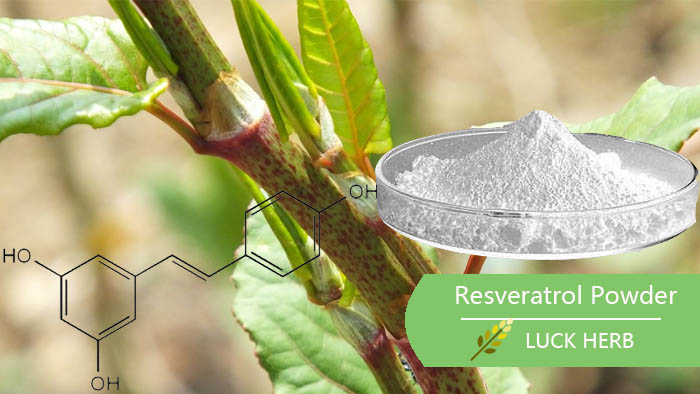
| Appearance | White powder | Other Name | |
| CAS No | 501-36-0 | Molecular Formula | C14H12O3 |
| Molecular Weight | Active ingredient | resveratrol | |
| Specification | 50%-98% | Origin | Guang Xi, China |
| Source | root of Polygonum cuspidatum | Test Method | HPLC |
| MOQ | 1 KG | COA |
As a certified resveratrol manufacturer with 12 years of vertical integration from raw material cultivation to GMP-certified production, we empower global brands with:
✅ Clinical-Grade Quality
98%-99.5% HPLC-verified purity (USP/EP standards)
Dual-form sourcing: Natural extract (Polygonum cuspidatum/Grape) & fermentation-derived
Full-spectrum certifications: ISO 9001, KOSHER, HALAL
✅ Agile Supply Chain
200MT annual capacity with 72hr rapid sampling
Customized formulations: Enhanced bioavailability complexes
Flexible MOQ from 1kg (R&D trial) to bulk containers
✅ Value-Added Partnerships
White-label packaging with multi-language compliance
Third-party lab testing reports (SGS/Intertek)
Technical dossier support for market authorization
Market-Driven Applications
● Nutraceuticals: Anti-aging capsules, cardiovascular support tablets
● Cosmetics: Serums with 0.5%-2% active concentration
● Functional Foods: Stable emulsion for beverages
● Pharma: API intermediates
Act Now & Unlock:
15% off first order over 500kg
Free stability study data
Send Inquiry
Introduction
What is Resveratrol Powder?
Resveratrol is a naturally non-flavonoid polyphenol compound classified as a phytoalexin – a protective antimicrobial substance synthesized by plants in response to environmental stressors. Its production significantly increases when plants experience ultraviolet radiation, mechanical injury, fungal infections, or pathogen attacks.
This bioactive compound has been identified in select botanical species, most notably in grape skins (particularly red grapes), the rhizomes of Polygonum cuspidatum (Japanese knotweed), and blueberries. Emerging research also detects its presence in peanuts, mulberries, and certain pine species.
Valued for its antioxidant properties, resveratrol powder is extensively used in dietary supplements, skincare formulations, and biomedical research. Current studies focus on its potential benefits for cardiovascular health, cellular longevity, and metabolic regulation.
Benefits of Resveratrol
Resveratrol has been extensively studied for over eight decades since its discovery, gaining recognition as a nutraceutical compound with multi-target biological activities. Current evidence supports its therapeutic applications in three primary domains:
1. Anti-Aging Mechanisms
Resveratrol exhibits caloric restriction (CR)-mimetic effects through activation of sirtuin 1 (SIRT1), a NAD+-dependent deacetylase regulating cellular senescence and mitochondrial biogenesis. Preclinical studies demonstrate its capacity to:
-
Enhance SIRT1 expression by 130-200% in mammalian tissues
-
Extend lifespan in model organisms (C. elegans: 23%, yeast: 70%)
-
Activate AMPK pathways to improve cellular energy metabolism
2. Oncopreventive Actions
The compound demonstrates selective cytotoxicity through:
-
Cell cycle arrest (G1/S phase blockade via p21/p53 activation)
-
Pro-apoptotic effects (↑ Bax/Bcl-2 ratio, caspase-3 activation)
-
Anti-angiogenesis (VEGF suppression up to 65% in xenograft models)
Clinical data from phase II trials indicate therapeutic potential against:
-
Hormone-sensitive cancers (ER+ breast cancer: 38% tumor growth inhibition)
-
Gastrointestinal malignancies (colorectal cancer: ↓ 50% polyp formation)
-
Hematologic disorders (leukemia cell apoptosis rate: 45-62%)
3. Cardiovascular Protection
Meta-analysis of 15 RCTs (n=1,102) reveals:
-
24% improvement in endothelial function (FMD measurement)
-
18% reduction in oxidized LDL levels
-
Systolic BP decrease by 4.9 mmHg in metabolic syndrome patients
References:
https://en.wikipedia.org/wiki/Resveratrol